
Science Writer & Editor

Hello! I'm a science writer and children's book author.

Recent Articles

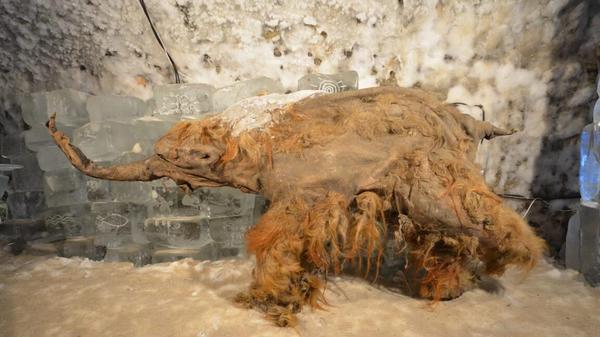
World’s oldest RNA extracted from Ice Age woolly mammoth

A young woolly mammoth now known as Yuka was frozen in the Siberian permafrost for about 40,000 years before it was discovered by local tusk hunters in 2010. The hunters soon handed it over to scientists, who were excited to see its exquisite level of preservation, with skin, muscle tissue, and even reddish hair intact. Later research showed that, while full cloning was impossible, Yuka’s DNA was in such good condition that some cell nuclei could even begin limited activity when placed inside mo...

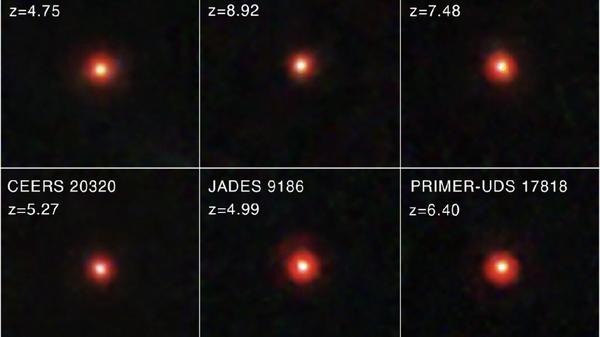
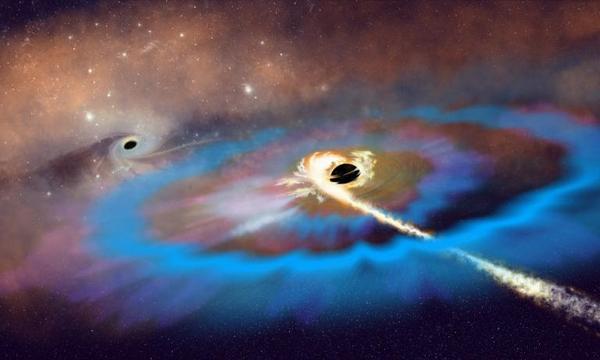
Runaway black hole mergers may have built supermassive black holes

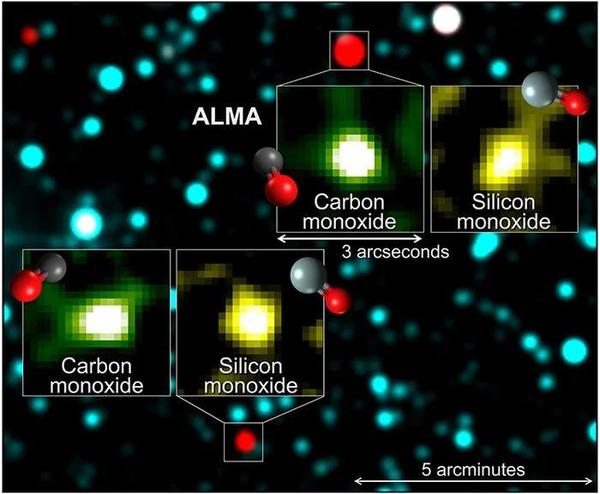
A new simulation could help solve one of astronomy’s longstanding mysteries—how supermassive black holes formed so rapidly—along with a new one: What are the James Webb Space Telescope’s (JWST) “little red dots?”
Invisible leviathans lurk at the cores of nearly all of the 2 trillion or so galaxies strewn throughout space-time. Monster black holes entered the cosmic scene soon after the Universe’s birth and grew rapidly, reaching millions or even billions of times the Sun’s mass in less than a bi...

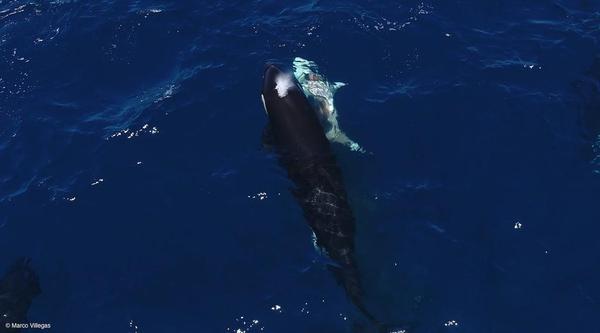
First-Ever Footage Shows Killer Whales Attacking Great White Shark Nursery

An orca pod has been spotted for the first time repeatedly targeting and flipping young great white sharks onto their backs to paralyze and dismember themOrcas, or “killer whales,” are not known for their amiable demeanor. The famous bullies attack boats and pester other animals for reasons that sometimes aren’t entirely clear. Now, for the first time, they’ve been spotted repeatedly targeting young great white sharks in a shark nursery, according to a new paper published in Frontiers in Marine...

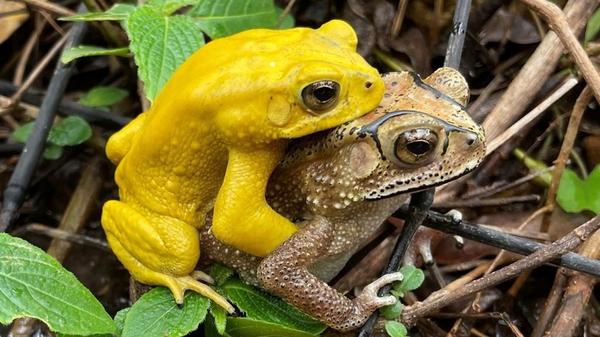
Scientists reveal the secret of toads that can turn neon yellow

Scientists say this strongly suggests the toads naturally color-code themselves to prevent any cases of mistaken identity. While males of other species often display brilliant colors to attract females, these toads seem to turn traffic light-yellow to send a signal that repels other males. “In explosive breeding species, mispairings are common,” said Susanne Stückler, a research associate at Schönbrunn Zoo who led the study. Since the breeding period is so brief, toads must find mates very quick...

Black hole caught snacking on star far from host galaxy’s center

For the first time, astronomers have detected intense, fast-changing radio signals from a tidal disruption event, dubbed AT2024tvd, located outside its galaxy’s core. Now, astronomers are trying to understand what the black hole is doing 2,600 light-years from where they expected it to be, what its strange signals mean, and whether there are more off-kilter events like it happening across the cosmos. 


Supermassive black holes anchor nearly every large galaxy in the universe. These popular cos...

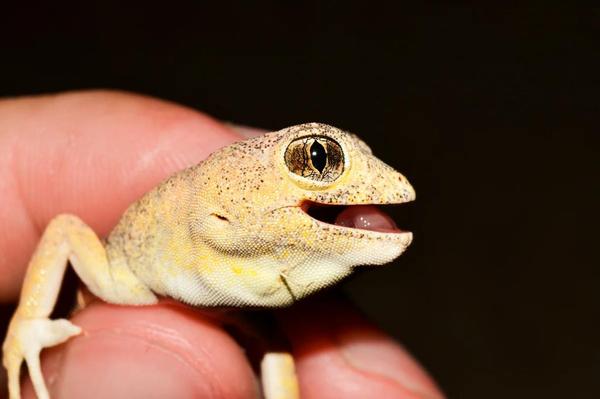
Mildly Menacing Mating Calls Lead to Discovery of New Gecko Species

On a cool, starry night six years ago, a young scientist crept barefoot across dunes in the Namib Desert in southern Africa. With his pants slung over one arm and his flashlight sweeping the sand, the researcher, François Becker, was hunting—not for the black rhinos, elephants, ostriches or hyenas that make their homes there but for an elusive creature called the barking gecko. These ultra-shy lizards are only about the size of a stick of string cheese, but they possess powerful vocal cords to s...

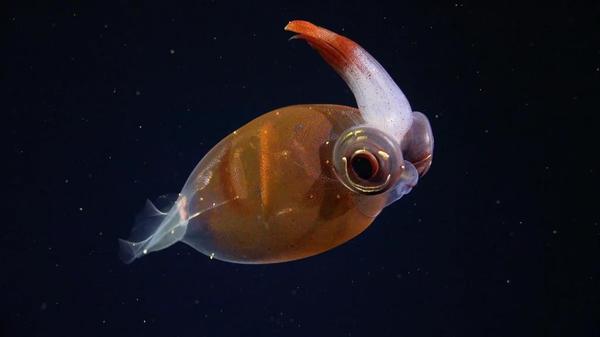
Pastel Pink Lobsters and Goofy-Looking Squid Among Deep-Sea Oddities Discovered in Ocean Abyss

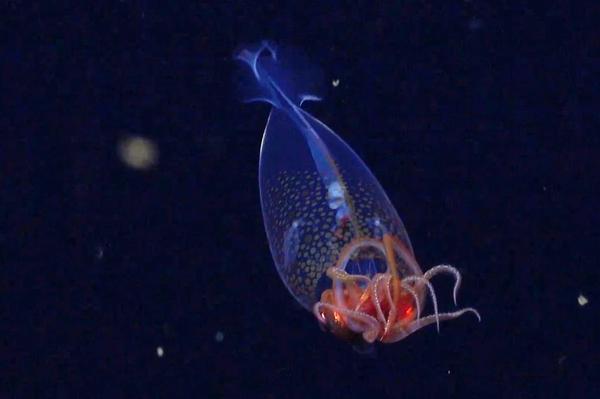
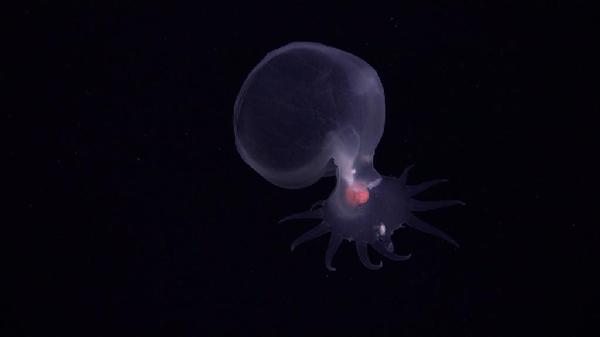
Two miles below the ocean’s surface, off the coast of Argentina, an underwater gorge plunges nearly twice as deep as the Grand Canyon. The trench and the nearby ocean floor are crawling with creatures that seem like they belong in an alien carnival, including a see-through squid with a hornlike appendage, pale pink lobsters, a lumbering king crab carrying 100 hitchhiking barnacles and a ghostly squid that hovers somewhere between goofy and grotesque.In July and August scientists onboard the Schm...

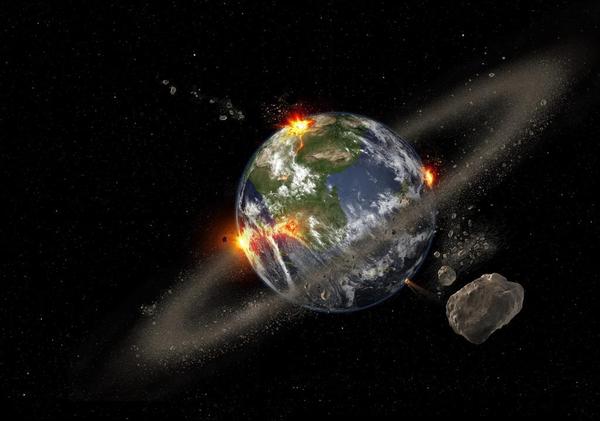
Did Earth once have a ring?

Amid the cold silence of the main belt, a giant rock drifts through space. It has existed for billions of years unchanged, but today, it will be irrevocably broken.


Another rocky object hurtles toward it, smashing the asteroid and sending a shower of shards outward. One dangerously large fragment careens toward the Sun on a path that threatens Earth. After a months-long journey, it reaches the planet — but there’s no impact. The asteroid chunk’s trajectory has brought it so close to Earth tha...

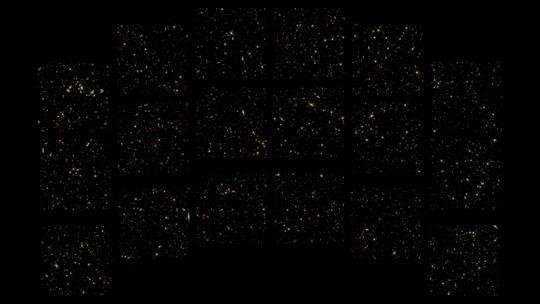
One Survey by NASA’s Roman Could Unveil 100,000 Cosmic Explosions

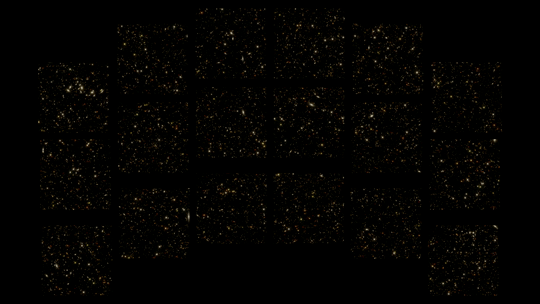
Scientists predict one of the major surveys by NASA’s upcoming Nancy Grace Roman Space Telescope may reveal around 100,000 celestial blasts, ranging from exploding stars to feeding black holes. Roman may even find evidence of some of the universe’s first stars, which are thought to completely self-destruct without leaving any remnant behind.
Cosmic explosions offer clues to some of the biggest mysteries of the universe. One is the nature of dark energy, the mysterious pressure thought to be acce...

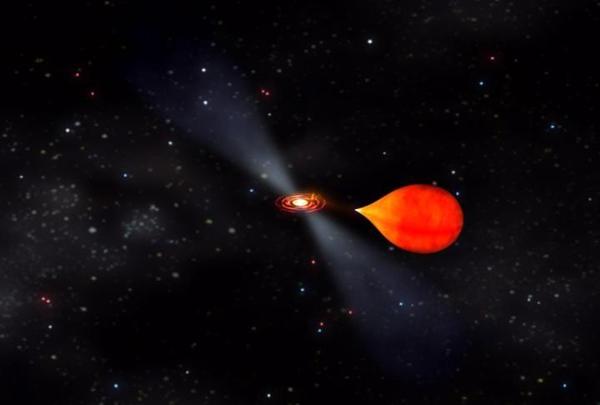
Astronomers discover a pulsar and a helium star orbiting each other

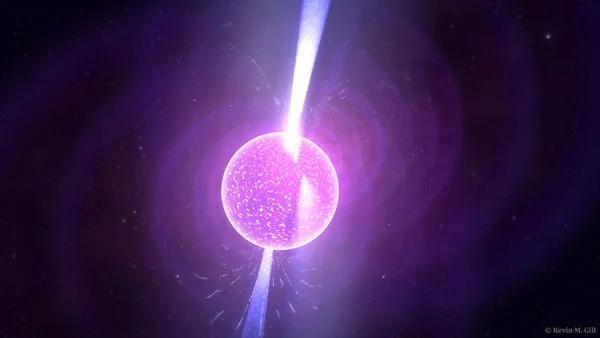
Astronomers have spotted a rare cosmic duo: a neutron star that rotates nearly a hundred times every second locked in an ultra-tight orbit with a semi-shredded star. The scientists who found the pair say one of these stars swallowed the other whole and then spat it back out.


It’s the first discovery of a millisecond pulsar with a helium star companion – a type of system long predicted by some theories, but never observed until now. Pulsars are neutron stars that shoot beams of radiation from...

Simulations find ghostly whirls of dark matter trailing galaxy arms

Galaxies are far more than the sum of their stars. Long before stars even formed, dark matter clumped up and drew regular matter together with its gravity, providing the invisible scaffolding upon which stars and galaxies eventually grew.
Today, nearly all galaxies are still embedded in giant “halos” of dark matter that extend far beyond their visible borders and hold them together, anchoring stars that move so quickly they would otherwise break out of their galaxy’s gravitational grip and spend...

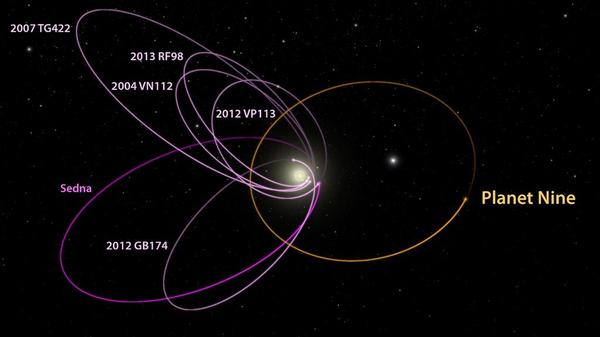
Have astronomers found Planet Nine?

Science textbooks may be in for another revision. Our solar system shrank from nine planets to eight after the International Astronomical Union demoted Pluto in 2006. But there may yet be another world lurking beyond Neptune — and astronomers may have just found it.


In 2016, astronomers proposed that our solar system could harbor a stealthy ninth planet based on a strange clustering of orbits they detected among distant Kuiper Belt objects. They suggested the unseen world may be gravitational...

Astronomers find a strange pulsar blinking in slow motion

About 2,600 light-years away, a dead star is sending signals from beyond the grave. 
Astronomers recently found the strange beacon, which appears to be a pulsar blinking in slow motion — something that shouldn’t be possible.

“It’s incredibly exciting to discover such a long-period pulsar,” says Yuanming Wang, a postdoctoral researcher at Swinburne University in Australia and the lead author of a paper about the discovery published March 28 in The Astrophysical Journal Letters. “But what’s...

NASA’s Roman Mission Shares Detailed Plans to Scour Skies

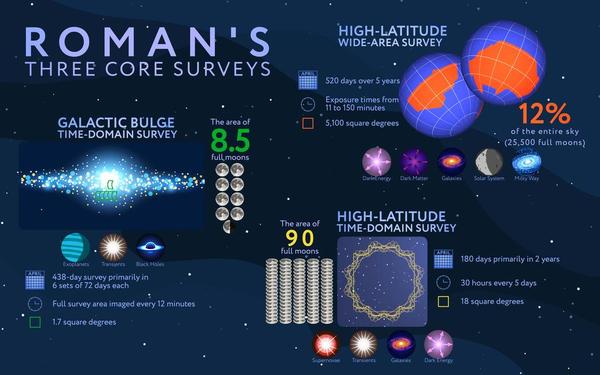
NASA’s Nancy Grace Roman Space Telescope team shared Thursday the designs for the three core surveys the mission will conduct after launch. These observation programs are designed to investigate some of the most profound mysteries in astrophysics while enabling expansive cosmic exploration that will revolutionize our understanding of the universe.
“Roman’s setting out to do wide, deep surveys of the universe in a way that will help us answer questions about how dark energy and dark matter govern...

Roman and Hubble

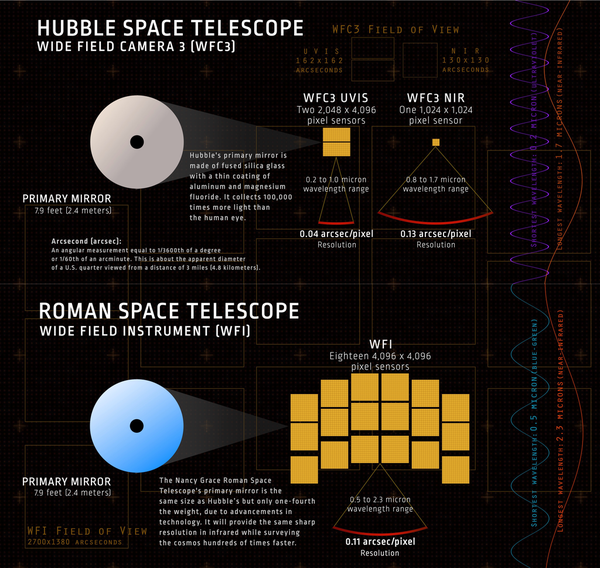
NASA’s nearly complete Nancy Grace Roman Space Telescope will create enormous cosmic panoramas, which astronomers will use to explore everything from dark energy and dark matter to distant planets and black holes. Though it’s often compared to the Hubble Space Telescope, Roman will study the cosmos in a unique and complementary way.

Roman will collect light from far across the universe using a primary mirror that’s 7.9 feet (2.4 meters) wide — the same size as Hubble’s primary mirror. Roman’s...

This Is the First Colossal Squid Filmed in the Deep Sea—And It’s a Baby!

The first confirmed live observation of the colossal squid (Mesonychoteuthis hamiltoni) in its natural habitat was taken by the remotely operated vehicle SuBastian on March 9 during a flagship expedition by The Nippon Foundation-Nekton Ocean Census in the remote South Sandwich Islands in the South Atlantic Ocean. The squid is a baby that is about one foot long.A colossal squid was filmed for the first time in its natural habitat near the South Sandwich Islands during a recent expedition, and it...

Mystery 'interstellar icy objects' are carrying the seeds of life

In the century or so since Edwin Hubble discovered that the Milky Way is just one of countless galaxies in the universe, our understanding of our home galaxy has grown in leaps and bounds. But as recent research into a new type of cosmic object shows, there’s still plenty left to learn.


Astronomers found two strange, dense, icy objects by chance in 2021 during a survey of our galaxy’s disk by Japan’s AKARI satellite. A closer look showed that they are made of interstellar ice (containing both...

Meet Some of the Strangest Deep-Sea Creatures, from ‘Sea Pigs’ to ‘Disco Worms’

A riotous photography collection from a recent underwater mission off the coast of Chile shows new and fascinating deep-sea creatures—including a “mystery mollusk,” a bioluminescent jellyfish and a “sea pig”An entire world lives deep under the ocean’s surface, far from human notice and as bustling as any city. Animals such as tubeworms and clams live crowded around plumes of methane that bubble up through cracks in the ocean floor. Their residence attracts shrimp, fish and many other creatures....

Stunning Antarctic Sea Creatures Discovered after Iceberg Breaks Away

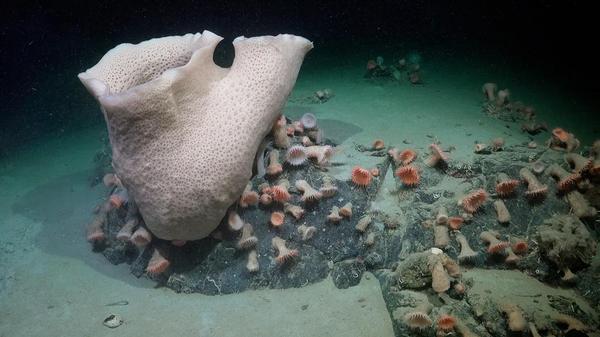
A large sponge, a cluster of anemones, and other life is seen nearly 230 meters deep at an area of the seabed that was very recently covered by the George VI Ice Shelf in Antarctica. Sponges can grow very slowly, sometimes less than two centimeters a year, so the size of this specimen suggests this community has been active for decades, perhaps even hundreds of years.A calving iceberg exposed a region that never before had been seen by human eyes, revealing a vibrant, thriving ecosystemIn H. P....

Team Preps to Study Dark Energy via Exploding Stars With NASA’s Roman

The universe is ballooning outward at an ever-faster clip under the power of an unknown force dubbed dark energy. One of the major goals for NASA’s upcoming Nancy Grace Roman Space Telescope is to help astronomers gather clues to the mystery. One team is setting the stage now to help astronomers prepare for this exciting science.
“Roman will scan the cosmos a thousand times faster than NASA’s Hubble Space Telescope can while offering Hubble-like image quality,” said Rebekah Hounsell, an assistan...

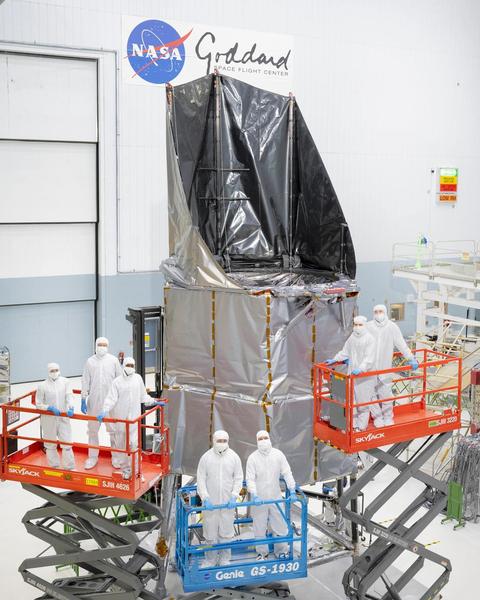
NASA Successfully Joins Sunshade to Roman Observatory’s ‘Exoskeleton’

NASA’s Nancy Grace Roman Space Telescope team has successfully integrated the mission’s deployable aperture cover — a visor-like sunshade that will help prevent unwanted light from entering the telescope — to the outer barrel assembly, another structure designed to shield the telescope from stray light in addition to keeping it at a stable temperature.
“It’s been incredible to see these major components go from computer models to building and now integrating them,” said Sheri Thorn, an aerospace...

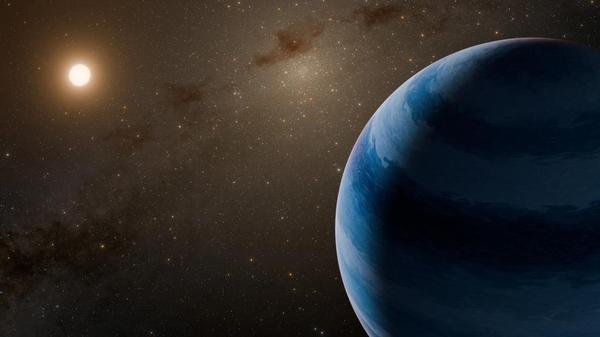
NASA Scientists Spot Candidate for Speediest Exoplanet System

Astronomers may have discovered a scrawny star bolting through the middle of our galaxy with a planet in tow. If confirmed, the pair sets a new record for the fastest-moving exoplanet system, nearly double our solar system’s speed through the Milky Way.
The planetary system is thought to move at least 1.2 million miles per hour, or 540 kilometers per second.
“We think this is a so-called super-Neptune world orbiting a low-mass star at a distance that would lie between the orbits of Venus and Ear...

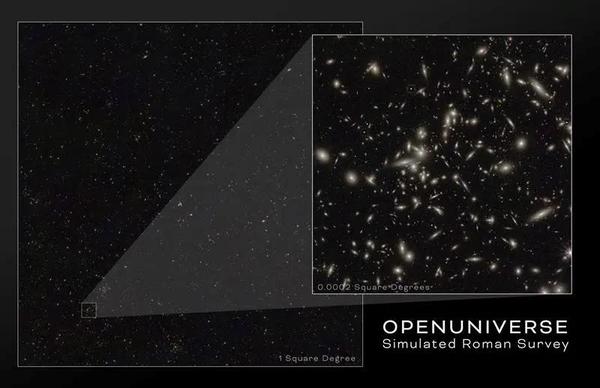
New Simulated Universe Previews Panoramas From NASA’s Roman Telescope

Astronomers have released a set of more than a million simulated images showcasing the cosmos as NASA’s upcoming Nancy Grace Roman Space Telescope will see it. This preview will help scientists explore a myriad of Roman’s science goals.
“We used a supercomputer to create a synthetic universe and simulated billions of years of evolution, tracing every photon’s path all the way from each cosmic object to Roman’s detectors,” said Michael Troxel, an associate professor of physics at Duke University...
Load More